Bitcoin Up or Down on Moon.com is a directional wager on BTC’s quoted price. Choose Up if you expect the price to rise from entry or Down if you expect it to fall. Leverage determines exposure and liquidation distance, so direction alone is not enough to define the risk.
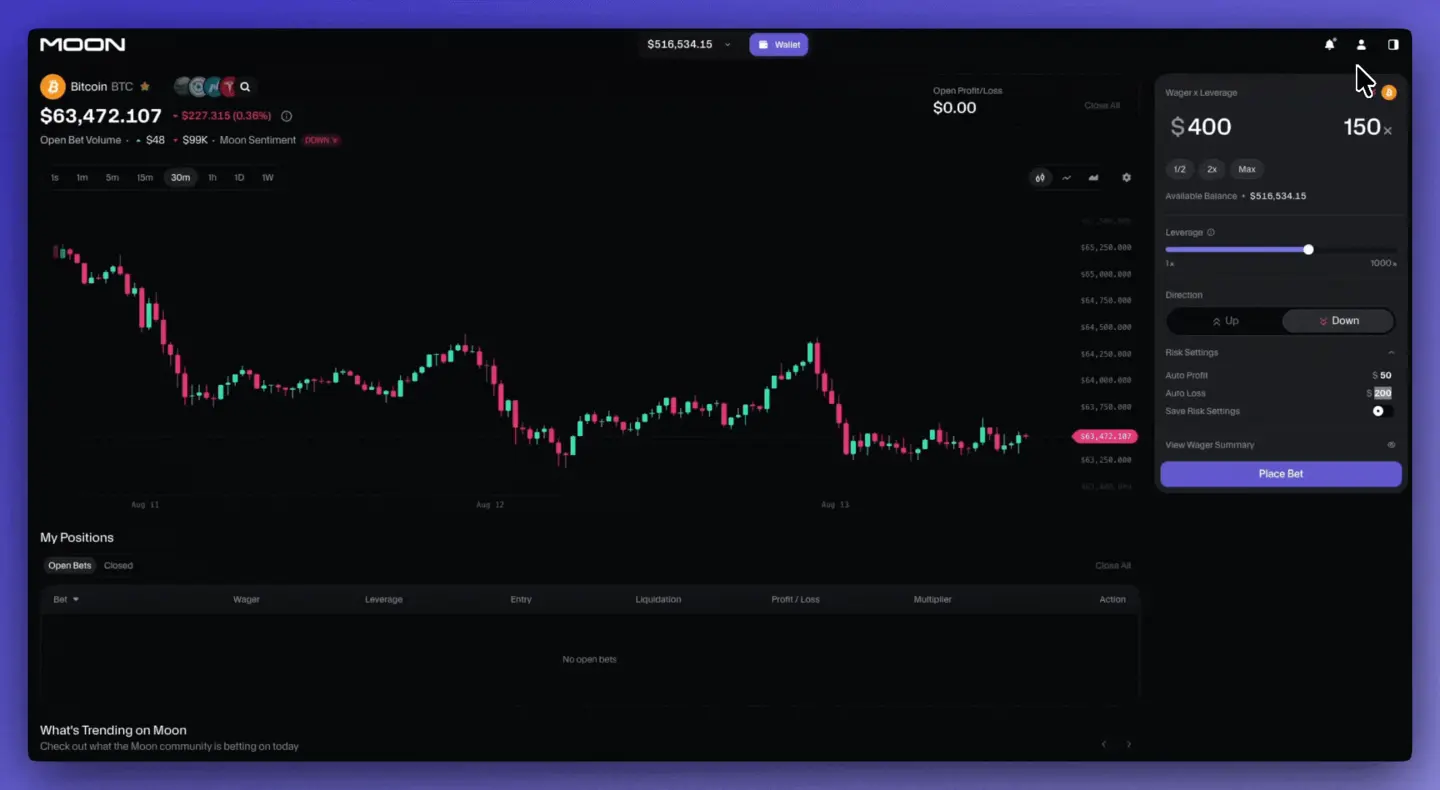
What the two buttons mean
Up and Down refer to the change from the position’s entry price. They do not refer to whether Bitcoin is generally bullish or bearish over a week, month or year. A position can be directionally reasonable over a long period and still fail at a highly leveraged short-term entry.
Entry and path dependency
The route price takes matters when liquidation is present. Suppose BTC eventually rises 3%, but first falls enough to cross the selected Bust Price. An Up position may already have closed before the later rise. This is why liquidation distance belongs in every scenario.
Choosing a timeframe
A one-minute chart emphasises immediate noise; an hourly chart provides context but can conceal fast intraperiod moves. Compare more than one timeframe and align it with the expected duration of the wager. Do not use a timeframe simply because it makes a preferred direction look obvious.
Building two scenarios
Before choosing a direction, write a base case and an invalidation case. For Up, identify both the evidence for a rise and the price action that would show the idea is wrong. Repeat the process for Down. This reduces the temptation to reinterpret every movement after entry.
Avoiding directional bias
Recent candles, social commentary and previous wins can create overconfidence. Treat every wager as a new decision, cap the amount at risk and avoid doubling the next wager after a loss.
Frequently asked questions
Is Up safer than Down?
No. The relative risk depends on entry, volatility, leverage and liquidation distance—not the button label.
Can I switch direction after opening?
A position must be managed under the available platform controls. Reversing a view generally requires closing and making a separate decision rather than treating the original plan as unchanged.
Does a correct prediction always make money?
No. Fees, the size of the move, entry timing and liquidation can change the outcome.